
Flood and Fire
6 x 8 x 6
thread
"Flood and Fire" is the fourth in a series of textile pieces responding to the climate crisis. The series includes art quilts, wall hangings, and textile sculpture. This vessel represents our earth calling us to take action. It is crying out with flood and fire.

Nature’s Chemistry
23 x 23
coreopsis and wood ash, recovered cotton, yarn
Natural dye processes often reveal singular patterns and colors. The flood like patterns here occur when dry fabric strips are left to slowly soak up dye made from coreopsis flowers. The fire colors—yellow, orange and red—are created by combining coreopsis dye and –appropriately--wood ash. The dye chemistry seems to speak: “Flood and Fire!” Perhaps it is nature’s warning. Perhaps it is nature’s plea.

Beauty and Breath Lost
28 x 11
fresh leaf indigo and coreopsis, vintage tablecloth, recovered cotton
Plants create beauty and enhance the air we breathe. We lose both when flood and fire destroy the earth's vegetation. This piece celebrates the beauty of what has been lost through our neglect to address climate change. The overall design is chosen to recall a Japanese shrine banner.

What Have We Left Our Children?
24 x 13 x 4
fresh leaf indigo, coreopsis,wood ash, goldenrod, thread, vintage napkin, christening gown
Imagery of flood and fire created with natural dyes and machine embroidery surround the dress just as flood and fire engulfs our planet. Is this what we want for our children? What will generations ahead inherit?
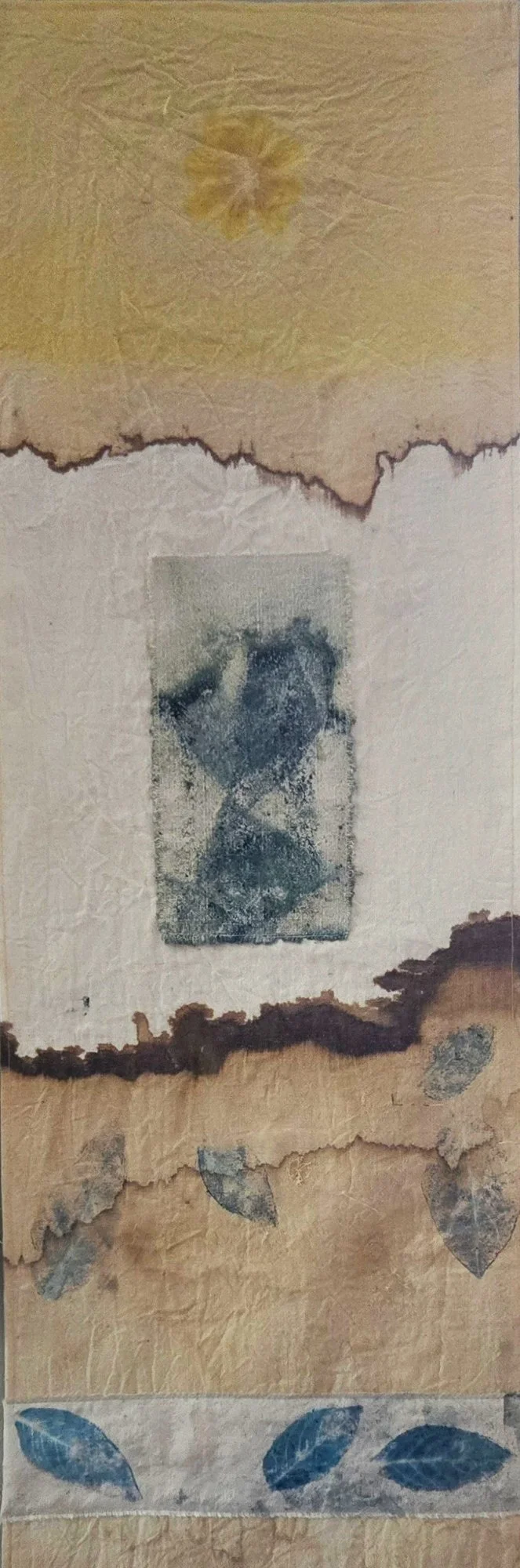
Leaf and Soil, The Dance of Decay
29 x 10
recovered cotton and silk colored with Japanese indigo, goldenrod, dyer’s chamomile, and sulfur cosmos
“Leaf and Soil, The Dance of Decay’ tells the story of decomposing leaves and how they enrich the soil that will support the next season's grown. As we better understand the natural cycles of plant growth and decomposition we are encouraged to "leave the leaves" in the our gardens instead of raking them away and mulching with manufactured products. The dance of decay refers to the the gradual release of plants’ nutrients during decomposition that replenishes the soil, cultivating an environment in which plants thrive. This harmonious relationship, this dance, between the organic world and the soil fosters the overall health of our landscapes and ecosystems.